This content is for informational purposes only and does not constitute medical advice. Always consult a qualified healthcare provider before making dietary changes. Histamine tolerance is highly individual.
This information applies to histamine intolerance, DAO deficiency, and MCAS only. If you have a confirmed food allergy, this content does not apply to you. Food allergies involve the immune system and can be life-threatening. Please consult your allergist.
Is Pine nuts a trigger for histamine intolerance?
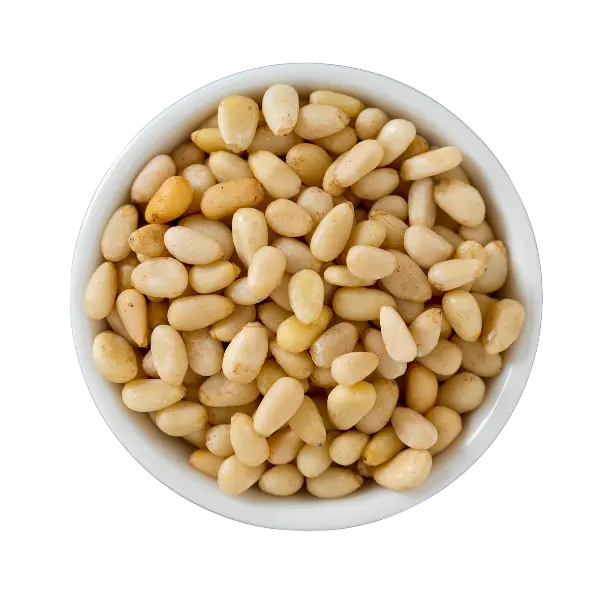
Pine nuts scores a 1 out of 3 on the SIGHI Food Compatibility List, placing it in the Low category. Some reference sources also suggest it may be a histamine liberator, though even the source itself describes this as unconfirmed or suspected.
Pine nuts & Histamine, what the evidence says
Pine nuts are generally rated as low in histamine on compatibility reference lists.
They are also associated with a well-documented temporary condition known as pine mouth or pine nut syndrome. It causes a bitter or metallic taste that usually develops one to three days after eating pine nuts and can persist for several days or even weeks. It has been most consistently associated with Pinus armandii, although the exact mechanism is not fully understood. Recent research has also suggested a possible genetic component. In one documented case, susceptibility to pine mouth was associated with a specific variant of the TAS2R38 gene, which influences how strongly a person perceives bitter tastes. This is a distinct consideration from histamine intolerance and can easily be mistaken for a delayed food reaction if the condition is not recognized.
Pine nuts are also high in oxalates. Laboratory measurements have placed them among the higher-oxalate nuts tested, with levels comparable to almond, cashew, and hazelnut, all measured above 150 mg per 100 grams. This is relevant for people also managing oxalate intake or a history of calcium-oxalate kidney stones.
Korean pine nuts are also a source of pinolenic acid, a fatty acid that has been studied for its effects on appetite and satiety signaling. One controlled trial found that a Korean pine nut oil extract reduced food intake at a subsequent meal, although it did not significantly change participants' reported feelings of fullness or hunger. A related study using the same extract measured a direct increase in circulating cholecystokinin (CCK), a hormone involved in satiety signaling. These are separate findings from related research rather than a single study demonstrating both effects together.
Pine nuts are high in fat and can develop rancidity when stored improperly, making proper storage an important freshness consideration separate from either histamine or pine mouth.
Does preparation change the risk?
Species, freshness, and quantity are the main variables affecting tolerance.
| Form | Risk Level | Notes |
|---|---|---|
| Fresh pine nuts, small portion | Low | Generally rated as low in histamine; freshness matters more than for some other nuts |
| Toasted pine nuts | Low | Light toasting does not meaningfully affect histamine content |
| Larger portions (beyond a tablespoon or two) | Moderate | Oxalate and FODMAP content both become more relevant at larger serving sizes |
| Older or stale | Moderate | High fat content means they can turn rancid, which may independently affect tolerance |
Note: Risk levels are based on clinical observations and patient reports, not standardized histamine measurements. Individual tolerance varies.
A food score is a reference, not a verdict.
Histamine intolerance is highly individual. A food that triggers symptoms in one person may be tolerated by another, even within the same category.
Strict elimination may help reduce symptoms initially, but long-term progress often depends on gradual reintroduction and pattern recognition. The goal is not to remove more foods over time, but to understand your personal tolerance and expand your diet when possible.
Tracking symptoms, portions, and context such as stress or timing can provide insights that generalized food lists cannot. This is where informed decisions replace fear-based restriction.
How to test your tolerance
 Start with a small amount.
Given the variability between species, a modest first trial helps you gauge your own response.
- Know about pine mouth.
A bitter, metallic taste appearing one to three days after eating pine nuts is a documented, temporary reaction linked to certain species, not a histamine trigger. It usually resolves on its own.
 Watch oxalate intake if relevant.
Pine nuts are on the higher end for oxalates among nuts, worth keeping in mind alongside your histamine tracking if you have a history of kidney stones.
 Prioritize freshness.
Pine nuts are high in fat and can turn rancid relatively quickly. Buy in smaller quantities and store in the refrigerator or freezer.
- Watch the context in dishes.
Pesto and similar preparations often combine pine nuts with cheese and garlic, making it harder to isolate the trigger.
 Track your response.
Log the source, freshness, and quantity using MyHistaMap to spot patterns over multiple trials.
Common questions about Pine nuts and histamine
Are pine nuts high in histamine?
No, pine nuts are generally rated as low in histamine on compatibility reference lists, though tolerance can vary by species.
What is pine mouth?
Pine mouth (or pine nut syndrome) is a documented, temporary taste disturbance linked to certain pine nut species, particularly Pinus armandii. It causes a bitter, metallic taste one to three days after eating and is unrelated to histamine.
Are pine nuts high in oxalates?
Yes. Laboratory measurements place pine nuts among the higher-oxalate nuts, at levels comparable to almond, cashew, and hazelnut.
Should I worry about rancid pine nuts?
Pine nuts are high in fat and can turn rancid relatively quickly. This is a freshness issue separate from histamine content, but it can still affect how you feel after eating them.
Some people find these options helpful


Supplements are optional tools, not a solution. Personal tracking and identifying your individual triggers remains the priority.
Where this information comes from
At MyHistaMap we curate information from peer reviewed research and recognized medical sources. This guide is a reference tool, not a medical prescription. Always track your own reactions and consult your healthcare provider.
References
- Ballin NZ, A Trial Investigating the Symptoms Related to Pine Nut Syndrome, Journal of Medical Toxicology, 2012: describes pine mouth as a bitter, metallic taste disturbance occurring one to three days after eating pine nuts, resolving without lasting harm, and associated with the species Pinus armandii. The source for this page's pine mouth mechanism and timeline.
- Risso D, et al., a study linking PTC/TAS2R38 taster status to a documented case of pine mouth, Chemical Senses / related toxicology literature: found a homozygous PTC taster genotype in a patient affected by pine mouth, suggesting bitter-taste genetics may contribute to susceptibility in at least this one documented case. The source for this page's note on a possible genetic component.
- Ruan QY, Zheng XQ, Chen BL, Xiao Y, Peng XX, Leung DWM, Liu EE, Determination of total oxalate contents of a great variety of foods commonly available in Southern China using an oxalate oxidase prepared from wheat bran, 2013: laboratory measurement finding pine nuts, almond, cashew, and hazelnut all above 150 mg total oxalate per 100 g, among the higher-oxalate nuts tested. The source for this page's oxalate figures.
- Hughes GM, Boyland EJ, Williams NJ, et al., The Effect of Korean Pine Nut Oil (PinnoThin) on Food Intake, Feeding Behaviour and Appetite, Lipids in Health and Disease, 2008: a double-blind placebo-controlled trial finding that Korean pine nut oil reduced food intake at a subsequent test meal by 9%, with no significant effect on self-reported appetite ratings. The source for this page's note on reduced food intake at a subsequent meal.
- Pasman WJ, Heimerikx J, Rubingh CM, et al., The Effect of Korean Pine Nut Oil on In Vitro CCK Release, on Appetite Sensations and on Gut Hormones in Post-Menopausal Overweight Women, Lipids in Health and Disease, 2008: found that Korean pine nut free fatty acids directly increased circulating cholecystokinin (CCK) compared to placebo. The source for this page's note on measured CCK increase, distinct from the Hughes et al. food intake findings.