This content is for informational purposes only and does not constitute medical advice. Always consult a qualified healthcare provider before making dietary changes. Histamine tolerance is highly individual.
This information applies to histamine intolerance, DAO deficiency, and MCAS only. If you have a confirmed food allergy, this content does not apply to you. Food allergies involve the immune system and can be life-threatening. Please consult your allergist.
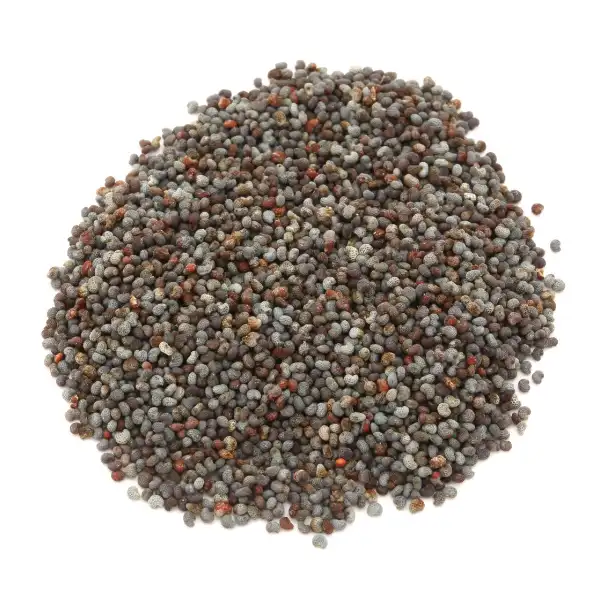
Is Poppy seeds a trigger for histamine intolerance?
Poppy seeds scores a 1 out of 3 on the SIGHI Food Compatibility List, placing it in the Low category.
Poppy seeds & Histamine, what the evidence says
Poppy seeds are not associated with meaningful histamine content on compatibility reference lists.
They carry a separate consideration related to opium alkaloids. Although the seeds themselves normally contain little or no opium alkaloids internally, morphine and codeine can contaminate their outer surface during harvesting and processing. The amount can vary considerably between batches. Eating poppy seeds or foods containing them can therefore result in detectable morphine and codeine in urine and, in some circumstances, a positive opiate drug test. This has been demonstrated in controlled studies, including studies in which participants consumed poppy seed products and subsequently produced urine samples containing morphine and codeine at concentrations that met drug-testing cutoffs. The European Union sets a maximum level of 20 mg/kg for opium alkaloids in whole, ground, or milled poppy seeds sold to consumers, calculated as morphine plus 0.2 times the codeine content. In February 2023, the U.S. Department of Defense issued a memo directing service members to avoid poppy seed products entirely, after data suggested some poppy seed varieties carried higher codeine contamination than previously reported. This is particularly relevant for people who are subject to drug testing.
Separately, poppy seeds are very high in oxalates. Reference data report an oxalate content of approximately 1,620 mg per 100 g. Because the concentration is high, portion size can make a substantial difference for people who are managing oxalate intake or have a history of calcium-oxalate kidney stones.
Does preparation change the risk?
How poppy seeds are used matters far more than histamine here. Culinary amounts are one thing; concentrated preparations are another entirely.
| Form | Risk Level | Notes |
|---|---|---|
| Poppy seeds sprinkled on food, small amount | Low | Not associated with meaningful histamine content; typical culinary amounts |
| Larger amounts (baked goods with a generous topping) | Moderate | Oxalate content and opiate alkaloid exposure both increase with quantity |
| Before a scheduled drug test | High | Not a histamine risk, but a documented cause of positive opiate drug tests |
| Concentrated preparations (e.g. steeped poppy seed tea) | High | Far more concentrated than culinary use; associated with serious opiate exposure risk |
Note: Risk levels are based on clinical observations and patient reports, not standardized histamine measurements. Individual tolerance varies.
A food score is a reference, not a verdict.
Histamine intolerance is highly individual. A food that triggers symptoms in one person may be tolerated by another, even within the same category.
Strict elimination may help reduce symptoms initially, but long-term progress often depends on gradual reintroduction and pattern recognition. The goal is not to remove more foods over time, but to understand your personal tolerance and expand your diet when possible.
Tracking symptoms, portions, and context such as stress or timing can provide insights that generalized food lists cannot. This is where informed decisions replace fear-based restriction.
How to test your tolerance
 Know the drug test risk.
If you have a scheduled drug test, avoid poppy seed products beforehand. Contamination levels vary between batches and can cause a genuine positive result, unrelated to histamine.
 Watch oxalate intake if relevant.
Poppy seeds are very high in oxalates. Portion size makes a real difference here if you're managing oxalate intake or have a history of kidney stones.
 Never steep poppy seeds into tea or concentrated preparations.
This concentrates opium alkaloids far beyond culinary levels and carries a genuine safety risk, unrelated to histamine.
 Culinary amounts are the norm.
The typical amount used to top a bagel or bread is what's been studied for histamine tolerance; larger quantities introduce other considerations.
 Track your response.
Log the quantity and form you tried using the MyHistaMap app to build a clearer picture over time.
Common questions about Poppy seeds and histamine
Are poppy seeds high in histamine?
No, poppy seeds are not associated with meaningful histamine content on compatibility reference lists.
Can poppy seeds really cause a positive drug test?
Yes. Their outer surface can be contaminated with morphine and codeine during harvesting, and controlled studies have shown this can produce urine concentrations meeting standard drug-testing cutoffs. In February 2023, the U.S. Department of Defense warned service members to avoid poppy seed products entirely for this reason.
Is there a regulatory limit on opium alkaloids in poppy seeds?
Yes. The European Union sets a maximum of 20 mg/kg for opium alkaloids (calculated as morphine plus 0.2 times codeine) in whole, ground, or milled poppy seeds sold to consumers.
Are poppy seeds high in oxalates?
Yes, very high. Reference data report approximately 1,620 mg of oxalate per 100 g, so portion size matters considerably if you're managing oxalate intake.
Some people find these options helpful





Supplements are optional tools, not a solution. Personal tracking and identifying your individual triggers remains the priority.
Where this information comes from
At MyHistaMap we curate information from peer reviewed research and recognized medical sources. This guide is a reference tool, not a medical prescription. Always track your own reactions and consult your healthcare provider.
References
- Cisneros GR Jr., U.S. Department of Defense memo on poppy seed consumption and drug testing, February 17, 2023: directed military departments to notify service members to avoid all poppy seed products after data suggested some varieties carried higher codeine contamination than previously reported. The source for this page's Department of Defense warning.
- Opium Alkaloids in Harvested and Thermally Processed Poppy Seeds: confirms that poppy seed opium alkaloid content results primarily from external contamination during harvesting rather than from the seed interior, and that ingestion has produced positive opiate results in urine, blood, and oral fluid across multiple controlled studies. The source for this page's contamination mechanism and drug-testing findings.
- European Commission Regulation (EU) 2023/915 on maximum levels for certain contaminants in food: sets a maximum level of 20 mg/kg for opium alkaloids (morphine plus 0.2 times codeine) in whole, ground, or milled poppy seeds sold to consumers. The source for this page's regulatory limit.
- Oxalosis and Hyperoxaluria Foundation, Oxalate List, 2024: reports poppy seed oxalate content at approximately 1,620 mg per 100 g. The source for this page's oxalate figure.