This content is for informational purposes only and does not constitute medical advice. Always consult a qualified healthcare provider before making dietary changes. Histamine tolerance is highly individual.
This information applies to histamine intolerance, DAO deficiency, and MCAS only. If you have a confirmed food allergy, this content does not apply to you. Food allergies involve the immune system and can be life-threatening. Please consult your allergist.
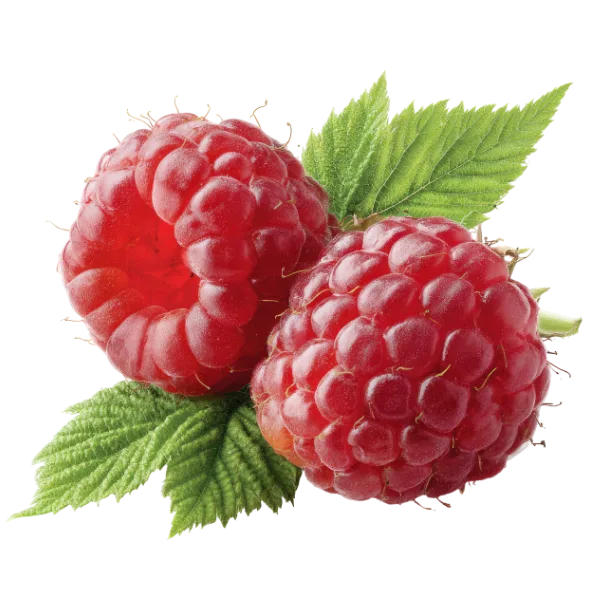
Is Raspberry a trigger for histamine intolerance?
Raspberry scores a 2 out of 3 on the SIGHI Food Compatibility List, placing it in the Moderate category.
Raspberry & Histamine, what the evidence says
Raspberry fruit itself doesn't carry either of the two things most commonly associated with the word "raspberry" in health marketing, and it's worth being clear about what those things actually are.
Raspberry ketone is an aromatic compound that occurs naturally in raspberries, but only in very small amounts. It has been heavily marketed as a weight-loss supplement, sometimes promoted as a "fat burner." The evidence does not support that claim. Research suggesting anti-obesity effects has largely come from cell and animal studies, while reliable human research on raspberry ketone alone is lacking. One small human trial tested a multi-ingredient weight-loss product that contained raspberry ketone along with caffeine, bitter orange, ginger, garlic, cayenne, and other ingredients, making it impossible to determine whether raspberry ketone itself had any effect. The amounts used in supplements are also dramatically higher than the quantities naturally present in raspberries. Eating raspberries therefore does not provide anything close to the doses used in supplement research.
Separately, raspberry leaf is a completely different part of the plant from the fruit. It has a long history of traditional use during pregnancy, particularly as a tea or tablet taken during the later weeks of pregnancy with the belief that it can prepare the uterus for labor or shorten childbirth. Some small human studies have reported modest effects on certain labor outcomes. For example, one randomized controlled trial involving 192 women found a modest reduction in the length of the second stage of labor, but no reduction in the first stage and no significant overall improvement in the birth outcomes studied. A 2021 systematic review that examined the available laboratory, animal, and human research concluded that the evidence supporting raspberry leaf during pregnancy remains weak and that further research is needed.
This is an important distinction because research on raspberry leaf does not tell us anything about eating raspberry fruit. Raspberry leaf is a separate herbal preparation with a different chemical composition and a different pattern of use.
Neither of these considerations relates directly to histamine. Raspberry fruit's own histamine content is generally considered low.
Does preparation change the risk?
Raspberry fruit's histamine profile stays low across fresh forms. Freshness and spoilage, similar to other soft berries, are the main variables.
| Form | Risk Level | Notes |
|---|---|---|
| Fresh, firm raspberries | Low | Generally low in histamine and well tolerated by most people |
| Frozen raspberries | Low | Freezing shortly after picking preserves the fruit's low-histamine profile |
| Raspberries stored several days, soft or moldy | Moderate | Like other soft berries, spoilage is associated with rising amine levels |
| Raspberry ketone supplements or raspberry leaf products | Moderate | These are separate products from the fruit; effects and safety data don't come from eating raspberries |
Note: Risk levels for fresh fruit are based on clinical observations and patient reports, not standardized histamine measurements. Individual tolerance varies.
A food score is a reference, not a verdict.
Histamine intolerance is highly individual. A food that triggers symptoms in one person may be tolerated by another, even within the same category.
Strict elimination may help reduce symptoms initially, but long-term progress often depends on gradual reintroduction and pattern recognition. The goal is not to remove more foods over time, but to understand your personal tolerance and expand your diet when possible.
Tracking symptoms, portions, and context such as stress or timing can provide insights that generalized food lists cannot. This is where informed decisions replace fear-based restriction.
How to test your tolerance
 Don't confuse raspberry ketone supplements with eating raspberries.
The doses used in weight-loss supplements are far higher than what's naturally in the fruit, and human evidence for weight loss is lacking.
 Know that raspberry leaf tea is a different product.
It's made from the leaf, not the fruit, and its evidence for pregnancy use is considered weak by a 2021 systematic review.
 Discuss raspberry leaf with your provider if pregnant.
This is a separate herbal product with its own considerations, unrelated to eating raspberry fruit.
- Inspect before eating a handful.
Raspberries are soft and prone to mold, so check for spoilage before eating, similar to blackberry.
 Freeze extra raspberries.
Freezing shortly after buying is a simple way to keep this fruit at its best for later use.
 This isn't a histamine tracking issue for ketone or leaf products.
For MyHistaMap purposes, track raspberry fruit itself. Raspberry ketone supplements and raspberry leaf products are separate topics.
Common questions about Raspberry and histamine
Is raspberry high in histamine?
No, raspberry fruit's histamine content is generally considered low.
Do raspberry ketone supplements help with weight loss?
There isn't good human evidence for this. Most supporting research comes from animal studies using doses far higher than what's naturally in raspberries, and reliable human trials on raspberry ketone alone don't exist.
Is raspberry leaf tea the same as eating raspberries?
No. Raspberry leaf is a different part of the plant with its own traditional use in pregnancy. A 2021 systematic review found the evidence for its effectiveness during labor remains weak.
How much raspberry ketone is naturally in raspberries?
Very little, ranging from about 0.009 to 4.3 milligrams per kilogram of fruit, compared to supplement doses of 100 to 1,400 milligrams per day.
Some people find these options helpful





Supplements are optional tools, not a solution. Personal tracking and identifying your individual triggers remains the priority.
Where this information comes from
At MyHistaMap we curate information from peer reviewed research and recognized medical sources. This guide is a reference tool, not a medical prescription. Always track your own reactions and consult your healthcare provider.
References
- Bredsdorff et al., Raspberry Ketone in Food Supplements: High Intake, Few Toxicity Data: A Cause for Safety Concern?, Regulatory Toxicology and Pharmacology, 2015: reports raspberry ketone content in raspberries of up to 4.3 mg/kg, compared to supplement doses of 100 to 1,400 mg/day. The source for the natural content and supplement dose comparison referenced on this page.
- NIH Office of Dietary Supplements, Dietary Supplements for Weight Loss: notes insufficient evidence to support raspberry ketone's weight-loss effects and describes a small human trial using a multi-ingredient product that prevents isolating raspberry ketone's specific effect. The source for the human evidence assessment referenced on this page.
- Biophysical Effects, Safety and Efficacy of Raspberry Leaf Use in Pregnancy: A Systematic Integrative Review, 2021: reviewed 13 studies, including 6 in humans, and concluded the evidence for raspberry leaf's effectiveness in labor remains weak. The source for the systematic review conclusion referenced on this page.
- Raspberry Leaf (Rubus idaeus) Use in Pregnancy: A Prospective Observational Study, 2024, referencing an earlier randomized controlled trial of 192 women: found a modest reduction in second-stage labor length but no significant overall improvement in birth outcomes. The source for the randomized trial findings referenced on this page.
- SIGHI (Swiss Interest Group Histamine Intolerance) Food Compatibility List: rates raspberry as well tolerated. The source for raspberry's histamine classification referenced on this page.