This content is for informational purposes only and does not constitute medical advice. Always consult a qualified healthcare provider before making dietary changes. Histamine tolerance is highly individual.
This information applies to histamine intolerance, DAO deficiency, and MCAS only. If you have a confirmed food allergy, this content does not apply to you. Food allergies involve the immune system and can be life-threatening. Please consult your allergist.
Is Star anise a trigger for histamine intolerance?
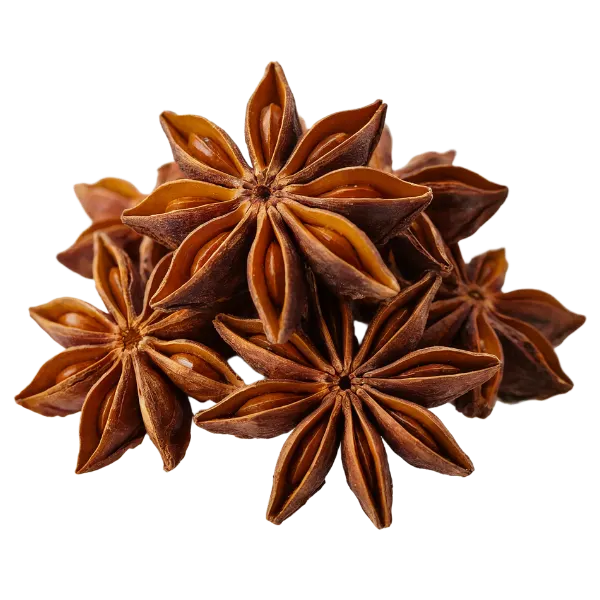
Star anise's histamine classification isn't conclusive; available reference sources don't agree or don't have enough data to assign a confident score.
Star anise & Histamine, what the evidence says
Star anise has an unclear histamine profile, with reference sources describing the available evidence as insufficient or contradictory.
Its most significant safety consideration involves a real risk of contamination. Chinese star anise, the species used as a spice and sometimes brewed as tea for infant colic, has repeatedly been found adulterated with Japanese star anise, a visually similar but highly toxic species containing neurotoxins such as anisatin and neoanisatin that interfere with GABA receptors in the brain. The FDA issued a public advisory after documented cases of infant seizures, irritability, vomiting, and other neurological symptoms linked to star anise tea, and published case reports have continued to document this pattern, including one involving a two-week-old infant. Because the two species closely resemble each other, especially once broken or ground, contamination cannot reliably be identified by sight. Star anise tea should not be given to infants for any reason, and buying whole, intact pods from a reputable source reduces the risk of contamination for anyone using it.
Like anise, star anise's essential oil contains high amounts of anethole and also contains estragole, a compound with documented genotoxic and carcinogenic properties. This is mainly relevant to concentrated extracts or essential oil rather than the whole spice used in cooking.
Does preparation change the risk?
Species identity and form matter enormously for star anise, more so than for almost any other spice in this category.
| Form | Risk Level | Notes |
|---|---|---|
| Whole, intact pods from a reputable source, culinary use | Moderate | Reduces, but doesn't eliminate, the risk of Japanese star anise contamination |
| Broken or ground star anise, unverified source | High | Contamination is harder to detect visually once the pod is broken or powdered |
| ⚠️ Star anise tea given to infants, any source | High | Documented cases of seizures and neurological symptoms in infants; not recommended for this use at all |
| Concentrated extract or essential oil | High | Contains estragole, a compound with documented genotoxic and carcinogenic properties, at higher concentration than the whole spice |
Note: Risk levels are based on clinical observations and patient reports, not standardized histamine measurements. Individual tolerance varies.
A food score is a reference, not a verdict.
Histamine intolerance is highly individual. A food that triggers symptoms in one person may be tolerated by another, even within the same category.
Strict elimination may help reduce symptoms initially, but long-term progress often depends on gradual reintroduction and pattern recognition. The goal is not to remove more foods over time, but to understand your personal tolerance and expand your diet when possible.
Tracking symptoms, portions, and context such as stress or timing can provide insights that generalized food lists cannot. This is where informed decisions replace fear-based restriction.
How to test your tolerance
 Never give star anise tea to infants.
Documented case reports describe seizures and other neurological symptoms in infants after consuming star anise tea, often traced to contamination with a toxic look-alike species.
 Buy whole, intact pods from a reputable source.
This reduces, though doesn't eliminate, the risk of contamination with Japanese star anise, which closely resembles the culinary species.
 Be extra cautious with broken or ground star anise.
Contamination is harder to identify visually once the pod is broken or powdered, since chemical analysis is often needed to tell the species apart.
 Keep concentrated forms in mind separately.
Star anise essential oil or extract contains more estragole than the whole spice used in cooking.
 Culinary amounts in cooking are the safer default.
Using whole, sourced star anise in typical cooking amounts, rather than as a concentrated tea or extract, is a more cautious approach.
 Track your response in MyHistaMap.
Log the form and source of star anise used, and any symptoms.
Common questions about Star anise and histamine
Is star anise high in histamine?
It's unclear. Reference sources describe the available evidence on star anise's histamine profile as insufficient or contradictory.
Why is star anise tea dangerous for infants?
Chinese star anise has repeatedly been found contaminated with Japanese star anise, a toxic look-alike species. The FDA issued a public advisory after documented infant seizures and other neurological symptoms linked to star anise tea. It should not be given to infants.
How can I tell if star anise is contaminated?
Not reliably by sight, especially once it's broken or ground. The two species closely resemble each other, and chemical analysis is often needed to distinguish them. Buying whole, intact pods from a reputable source reduces the risk.
Is star anise essential oil safe?
It contains estragole, a compound with documented genotoxic and carcinogenic properties, at a higher concentration than the whole spice used in cooking. This is mainly a concern for concentrated extract or oil use.
Some people find these options helpful





Supplements are optional tools, not a solution. Personal tracking and identifying your individual triggers remains the priority.
Where this information comes from
At MyHistaMap we curate information from peer reviewed research and recognized medical sources. This guide is a reference tool, not a medical prescription. Always track your own reactions and consult your healthcare provider.
References
- SIGHI (Swiss Interest Group Histamine Intolerance) Food Compatibility List: lists star anise, star anise seed, Chinese star anise, and badiam with an "insufficient or contradictory information" designation rather than a clear compatibility rating.
- Neonate with Seizures After Consuming Star Anise Tea, case report, 2021: describes a two-week-old infant with abnormal movements, irritability, and vomiting after star anise tea for colic, part of a documented pattern of similar cases in the pediatric literature. The source for this page's infant case report.
- Perret C et al., Apparent life-threatening event in infants: think about star anise intoxication!, Archives de Pediatrie, 2011: describes the neurotoxins anisatin, neoanisatin, and pseudoanisatin found in Japanese star anise as non-competitive antagonists of GABA receptors, and notes that the strong physical resemblance between the two species, especially once broken or ground, often requires chemical analysis to distinguish. The source for this page's mechanism and identification sections.
- FDA Public Health Advisory on star anise teas, U.S. Food and Drug Administration, 2003: issued after documented cases of illness, including in infants, associated with star anise tea, with symptoms including seizures. The source for this page's FDA advisory reference.
- Public Statement on the Use of Herbal Medicinal Products Containing Estragole, European Medicines Agency (EMA), Committee on Herbal Medicinal Products (HMPC): lists Illicium verum (star anise) among plants containing estragole, classified as a genotoxic carcinogen with exposure recommended to be kept as low as practically achievable. The source for this page's estragole section.