This content is for informational purposes only and does not constitute medical advice. Always consult a qualified healthcare provider before making dietary changes. Histamine tolerance is highly individual.
This information applies to histamine intolerance, DAO deficiency, and MCAS only. If you have a confirmed food allergy, this content does not apply to you. Food allergies involve the immune system and can be life-threatening. Please consult your allergist.
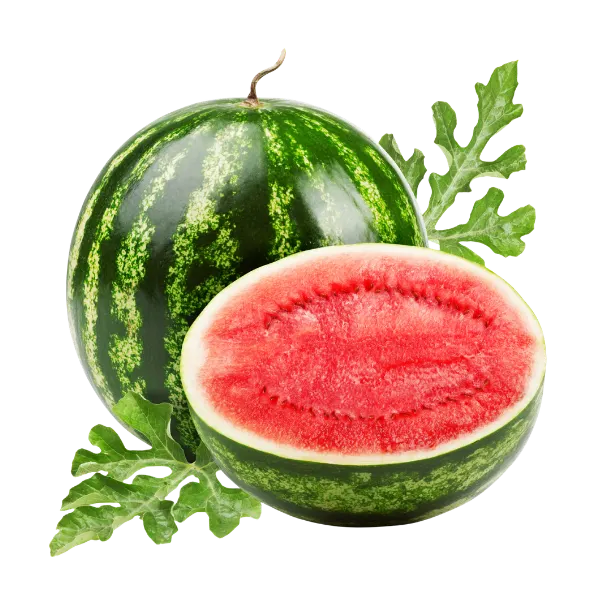
Is Watermelon a trigger for histamine intolerance?
Watermelon scores a 1 out of 3 on the SIGHI Food Compatibility List, placing it in the Low category. Some reference sources also suggest it may be a histamine liberator, though even the source itself describes this as unconfirmed or suspected.
Watermelon & Histamine, what the evidence says
Watermelon has a unique claim to fame: L-citrulline was first identified in watermelon juice, and the amino acid's name comes from Citrullus, the genus to which watermelon belongs. Watermelon remains one of the richest known natural food sources of L-citrulline. Citrulline can be converted by the body into L-arginine, which is then used in the production of nitric oxide, a molecule involved in blood vessel relaxation and regulation of vascular tone.
This has led to real research interest in watermelon and L-citrulline for blood pressure and cardiovascular health, but the picture is genuinely mixed rather than settled. Several meta-analyses of randomized trials have found modest reductions in blood pressure with L-citrulline supplementation, although other analyses have found little or no significant effect, and the doses used in supplement studies are generally several grams per day. More recent research has also looked specifically at watermelon rather than isolated citrulline. A randomized pilot trial tested actual watermelon flesh in adults with elevated blood pressure, with participants consuming either one or two cups per day for four weeks. Neither amount produced a statistically significant improvement in 24-hour ambulatory blood pressure compared with the control group. This distinction matters because the amount of L-citrulline naturally obtained from watermelon is much lower than the doses commonly used in supplements.
Another interesting detail is that L-citrulline is found in both the flesh and the rind of watermelon. Studies have found substantial concentrations in the rind, although the relative amount compared with the flesh varies depending on the cultivar and whether the comparison is made by fresh or dry weight. In other words, the rind can be a significant source of citrulline, but the claim that it always contains more than the flesh is too broad.
None of this relates to dietary histamine directly. Watermelon's histamine profile is a separate consideration, while its L-citrulline content raises an interesting but still unresolved question about how much cardiovascular effect can actually be obtained from eating the fruit itself.
Does preparation change the risk?
Watermelon's histamine profile stays low across fresh forms. Freshness is the main variable, separate from the citrulline research discussed above.
| Form | Risk Level | Notes |
|---|---|---|
| Fresh watermelon | Low | Naturally low in histamine and well tolerated by most people |
| Watermelon juice, freshly made | Low | Fine when consumed soon after preparation |
| Cut watermelon stored several days | Moderate | As with other cut fruit, prolonged storage is associated with rising amine levels |
| Concentrated citrulline/watermelon extract supplements | Low | Not a histamine concern; effects and doses differ substantially from eating the fruit |
Note: Risk levels are based on clinical observations and patient reports, not standardized histamine measurements. Individual tolerance varies.
A food score is a reference, not a verdict.
Histamine intolerance is highly individual. A food that triggers symptoms in one person may be tolerated by another, even within the same category.
Strict elimination may help reduce symptoms initially, but long-term progress often depends on gradual reintroduction and pattern recognition. The goal is not to remove more foods over time, but to understand your personal tolerance and expand your diet when possible.
Tracking symptoms, portions, and context such as stress or timing can provide insights that generalized food lists cannot. This is where informed decisions replace fear-based restriction.
How to test your tolerance
 Enjoy watermelon for its own sake.
Don't expect eating the fruit to replicate the blood pressure effects seen in concentrated citrulline supplement studies.
 Keep supplement claims in perspective.
Effective citrulline doses in research are generally several grams a day, more than what a typical serving of watermelon provides.
 Refrigerate cut watermelon promptly.
Like other cut fruit, don't let it sit out for extended periods before eating.
 The rind isn't necessarily citrulline-poor.
Some studies have found meaningful citrulline content in the rind, though the exact comparison to flesh varies by variety and measurement method.
- Don't substitute watermelon for blood pressure medication.
The evidence for whole fruit's effect on blood pressure is mixed and not strong enough to replace medical treatment.
 This isn't a histamine tracking nuance.
For MyHistaMap purposes, watermelon is generally low in histamine. Its citrulline research is a separate, cardiovascular topic.
Common questions about Watermelon and histamine
Is watermelon high in histamine?
No, watermelon is generally low in histamine and well tolerated by most people.
Does eating watermelon lower blood pressure?
The evidence is mixed. Concentrated citrulline supplements have shown modest reductions in some meta-analyses, but a randomized trial testing actual watermelon flesh found no significant blood pressure improvement after four weeks.
Why is watermelon associated with L-citrulline?
L-citrulline was first identified in watermelon juice, and the amino acid is named after Citrullus, watermelon's genus. Watermelon remains one of the richest known natural food sources of this compound.
Does watermelon rind have more citrulline than the flesh?
Sometimes, but not as a firm rule. Studies have found varying results depending on the cultivar and whether measurements are based on fresh or dry weight.
Some people find these options helpful





Supplements are optional tools, not a solution. Personal tracking and identifying your individual triggers remains the priority.
Where this information comes from
At MyHistaMap we curate information from peer reviewed research and recognized medical sources. This guide is a reference tool, not a medical prescription. Always track your own reactions and consult your healthcare provider.
References
- Current Evidence of Watermelon (Citrullus lanatus) Ingestion on Vascular Health: A Food Science and Technology Perspective: describes watermelon as the source where L-citrulline was first isolated and named, and reviews evidence on its vascular effects. The source for the citrulline naming and mechanism referenced on this page.
- Does L-citrulline Supplementation and Watermelon Intake Reduce Blood Pressure in Middle-Aged and Older Adults? A Systematic Review and Meta-Analysis, 2025: found modest but statistically significant blood pressure reductions with L-citrulline supplementation in older adults. The source for the meta-analysis findings referenced on this page.
- Randomized pilot trial of watermelon flesh consumption (1 or 2 cups daily for 4 weeks) in adults with elevated blood pressure: found no statistically significant improvement in 24-hour ambulatory blood pressure compared to control. The source for the whole-fruit trial referenced on this page.
- Rimando & Perkins-Veazie, Determination of Citrulline in Watermelon Rind, Journal of Chromatography A, 2005: found rind contained more citrulline than flesh by dry weight (24.7 vs 16.7 mg/g) but slightly less by fresh weight (1.3 vs 1.9 mg/g), with results varying by cultivar in other studies. The source for the rind-versus-flesh comparison referenced on this page.
- SIGHI (Swiss Interest Group Histamine Intolerance) Food Compatibility List: rates watermelon as well tolerated. The source for watermelon's histamine classification referenced on this page.