This content is for informational purposes only and does not constitute medical advice. Always consult a qualified healthcare provider before making dietary changes. Histamine tolerance is highly individual.
This information applies to histamine intolerance, DAO deficiency, and MCAS only. If you have a confirmed food allergy, this content does not apply to you. Food allergies involve the immune system and can be life-threatening. Please consult your allergist.
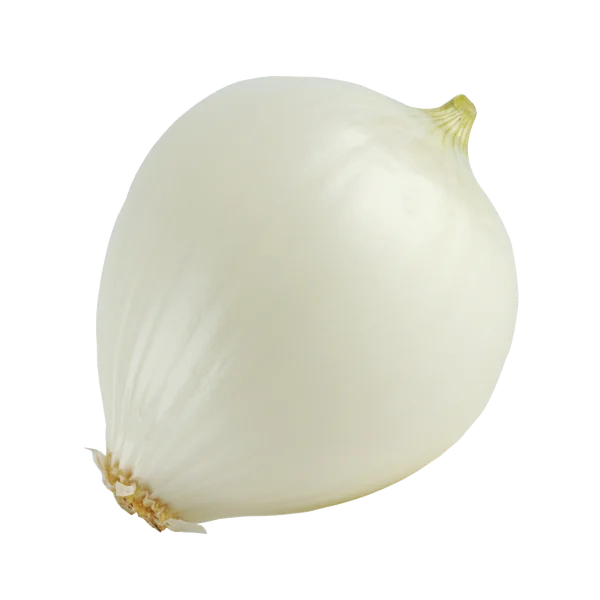
Is White onion a trigger for histamine intolerance?
White onion scores a 0 out of 3 on the SIGHI Food Compatibility List, placing it in the Safe category.
White onion & Histamine, what the evidence says
White onion is not associated with meaningful histamine content and is rated more favorably than regular onion on reference lists that distinguish between the varieties. Like other onion varieties, it contains naturally occurring flavonoids, although its flavonoid content is substantially lower than that of red and yellow onion. Published analyses have found red onion flavonoid content around 111 milligrams per 100 grams and yellow onion around 37 milligrams per 100 grams, compared to close to zero in white onion in the same study.
Quercetin is one of the flavonoids found in onions and has been studied in laboratory research for its effects on mast cells, a topic discussed in more detail on the onion page. The lower flavonoid content of white onion is therefore an interesting difference between varieties, rather than a histamine concern.
Beyond histamine, white onion shares the broader profile of alliums generally: it is low in oxalate and low in lectins, but notably high in fructans, a type of FODMAP.
Does preparation change the risk?
Portion size matters more than preparation method for white onion, given its fructan content.
| Form | Risk Level | Notes |
|---|---|---|
| Small amount, cooked | Low | Generally well tolerated in modest quantities |
| Larger amount | Moderate | Fructan content rises with larger portions, relevant for FODMAP sensitivity |
| Raw | Moderate | Same underlying profile as cooked; some people tolerate raw onion less well for reasons unrelated to histamine |
Note: Risk levels are based on clinical observations and patient reports, not standardized histamine measurements. Individual tolerance varies.
A food score is a reference, not a verdict.
Histamine intolerance is highly individual. A food that triggers symptoms in one person may be tolerated by another, even within the same category.
Strict elimination may help reduce symptoms initially, but long-term progress often depends on gradual reintroduction and pattern recognition. The goal is not to remove more foods over time, but to understand your personal tolerance and expand your diet when possible.
Tracking symptoms, portions, and context such as stress or timing can provide insights that generalized food lists cannot. This is where informed decisions replace fear-based restriction.
How to test your tolerance
 A gentler starting point than regular onion.
White onion is rated more favorably than regular onion on reference lists that distinguish between varieties, making it a reasonable place to start testing tolerance.
 Lower in quercetin than colored onions.
If you're specifically seeking quercetin, red or yellow onion contain substantially more than white onion. This is a nutritional difference, not a histamine one.
 Watch portion size for FODMAP sensitivity.
White onion is notably high in fructans, so larger portions are worth approaching with more caution if you're sensitive to FODMAPs.
 Track your response separately from regular onion.
Since white onion and regular onion are rated differently on reference lists, log them as distinct foods in MyHistaMap.
Common questions about White onion and histamine
Is white onion high in histamine?
No. White onion is not associated with meaningful histamine content, and is rated more favorably than regular onion on reference lists that distinguish between the varieties.
Is white onion different from regular onion for histamine purposes?
Yes. It's rated more favorably than regular onion on at least one major reference list that distinguishes between the varieties, making it a reasonable starting point for testing onion tolerance.
Does white onion have less quercetin than other onions?
Yes, substantially less. Published analyses found red onion flavonoid content around 111 mg per 100g and yellow onion around 37 mg per 100g, compared to close to zero in white onion.
Is white onion low FODMAP?
No. Like other onion varieties, white onion is notably high in fructans, a type of FODMAP, so portion size matters for anyone managing FODMAP sensitivity.
Some people find these options helpful





Supplements are optional tools, not a solution. Personal tracking and identifying your individual triggers remains the priority.
Where this information comes from
At MyHistaMap we curate information from peer reviewed research and recognized medical sources. This guide is a reference tool, not a medical prescription. Always track your own reactions and consult your healthcare provider.
References
- SIGHI (Swiss Interest Group Histamine Intolerance) Food Compatibility List, version 2024-08-29: lists white onion separately from regular onion, rating it more favorably and without the liberator marking that applies to regular onion. This is the source for the histamine classification referenced on this page.
- Antioxidants of 15 Onions With White, Yellow, and Red Colors and Their Relationship With Pungency, Anthocyanin, and Quercetin, LWT Food Science and Technology: measured total flavonoid content at approximately 111 mg/100g fresh weight in red onion, 37 mg/100g in yellow onion, and close to 0 mg/100g in white onion, the same two flavonoids (quercetin and quercetin glycoside) identified across all varieties tested. This is the source for the flavonoid comparison referenced on this page.
- Onions: FAQ, Nutrition Facts, & Macros, Strongr Fastr: reports onions are low in oxalates (roughly 5 to 15 mg per average onion) and low in lectins, as alliums are generally recognized as a low-lectin food family, while noting that most onions are not low FODMAP due to fructan content. This is the source for the oxalate, lectin, and FODMAP notes referenced on this page.